

Are Dental Implants in Turkey Safe? An Honest Guide
Yes — dental implants in Turkey can be very safe, and many UK patients get excellent, lasting results. But safety is not automatic; it depends almost entirely on the clinic you choose. The real risk comes from price-led "package" clinics that rush treatment, not from Turkey itself. Screen carefully and the odds are strongly in your favour.
So — is it actually safe?
Turkey places a very high volume of implants every year, and many of its clinics work to the same clinical standards, with the same implant brands and the same 3D planning, that you would find in the UK or Germany. Tens of thousands of patients travel and do well.
That is the honest top line. The equally honest second line is this: the safety range is wide. The same country that has excellent, conservative clinics also has high-volume "smile factories" that compete almost entirely on price, treat too many patients too quickly, and over-prescribe aggressive work (for example, grinding healthy teeth for crowns when the patient only needed whitening or a few veneers).
So the useful question is not "Is Turkey safe?" — it's "Is this specific clinic safe, and is this specific treatment plan right for me?" Almost everything below is about answering that second question.
The real risks (and what actually causes them)
- Over-treatment. The most common complaint in dental implants abroad reviews isn't a failed implant — it's healthy teeth being cut down unnecessarily. Cause: a sales-led plan, not a clinical one.
- Rushed timelines. Implants need the bone to heal around them before the final teeth go on. A clinic promising a finished, permanent result in 3–5 days for a complex case is compressing biology to fit a holiday.
- Infection or implant failure. Uncommon when hygiene, planning and case selection are good; more likely with poor sterilisation, smokers, or untreated gum disease.
- Communication gaps. Problems are harder to solve from another country if there's no clear aftercare plan or way to reach the clinic later.
Notice that none of these are caused by Turkey. They're caused by how a clinic chooses to operate — which means you can screen them out.
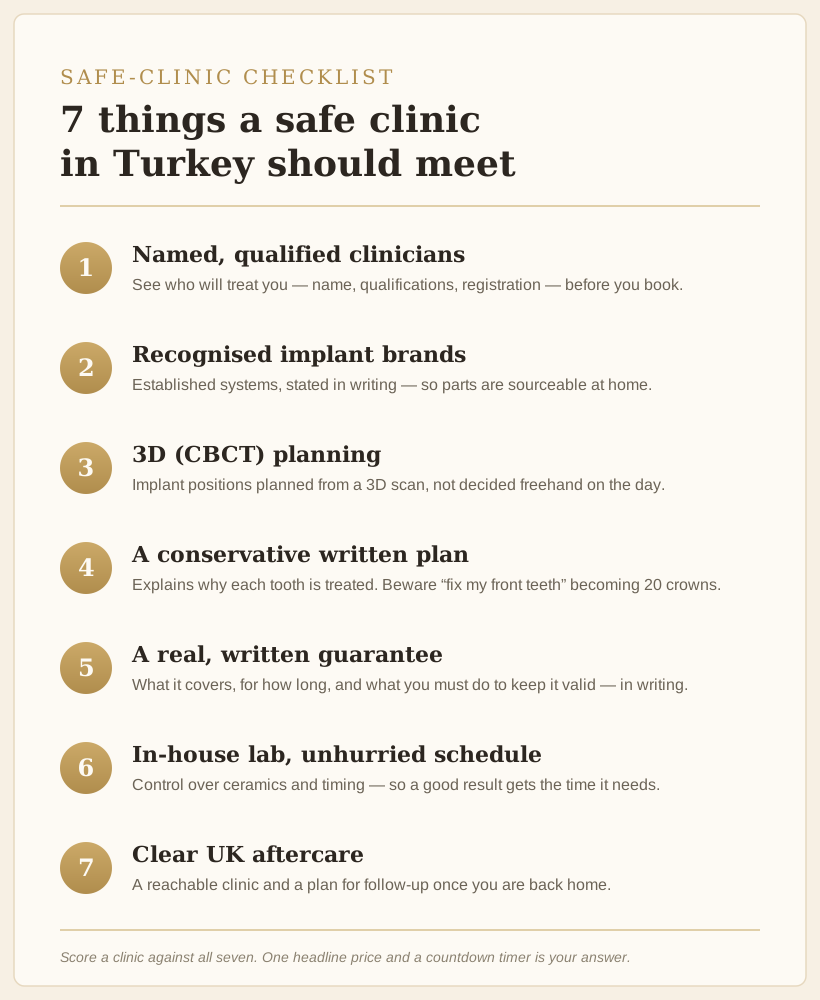
How to choose a safe clinic in Turkey
Treat this as a checklist. A clinic that scores well here is in a completely different category from a cheap package deal.
- Named, qualified clinicians. You should be able to see who will treat you — the dentist's name, qualifications and registration — before you book. Anonymous "our doctors" pages are a flag.
- Recognised implant brands. Ask which implant system they use and get it in writing (e.g. established Swiss/German systems). Branded implants have decades of data and globally available parts — important if you ever need a repair at home.
- 3D (CBCT) planning. Implant positions should be planned from a 3D scan of your jaw, not decided freehand on the day.
- A written treatment plan — and a conservative one. It should explain why each tooth is treated. Be wary of any plan that turns "I want to fix my front teeth" into "20 crowns."
- A real, written guarantee. What does it cover, for how long, and what do you have to do (check-ups, hygiene) to keep it valid? Get it in writing, not as a verbal promise.
- In-house lab, unhurried scheduling. Clinics that control their own ceramics and don't pack the calendar can take the time a good result needs.
- Clear aftercare for when you're home (see below). If they can't explain it, that tells you something.
If a clinic leads with a single headline price and a countdown timer, and gets vague when you ask the seven questions above — that is your answer.
"Turkey teeth reviews" — how to read them honestly
Reviews are useful, but only if you read them critically:
- Look for the 6–12 month follow-up, not the day-of selfie. A bright smile on discharge day means little; how the gums, bite and crowns look a year later is what matters.
- Read the critical reviews most carefully. What went wrong, and — crucially — how did the clinic respond? A clinic that fixed a problem is often safer than one with only flawless five-star reviews.
- Be sceptical of incentivised reviews (free nights, discounts for posting). Weigh independent platforms and patient forums more heavily.
- Match the reviewer's case to yours. A great single-implant review tells you little about a full-arch case.
What happens if it goes wrong — and how to avoid it
Most issues are preventable with the screening above. But plan for the worst case anyway:
- Before you travel, confirm in writing what the clinic does if something fails — remote review, revision policy, who pays for what, and whether they coordinate with a dentist in the UK.
- Keep your records. Insist on copies of your scans, the implant brand and batch/passport, the treatment plan and invoices. A UK dentist can only help you later if they know exactly what was done.
- Don't fly straight after major surgery. Build in recovery time; ask the clinic for their flight-timing guidance.
- Choose staged treatment for complex cases. For implants that need healing or bone grafting, two visits is the safe answer, not an upsell.
How aftercare works when you're back in the UK
This is the part package deals quietly skip, and it matters:
- Routine aftercare — check-ups, hygiene visits, small adjustments — can be done by an NHS or private dentist at home. Bring your records so they can see what was placed.
- A good Turkish clinic stays reachable. You should have a direct line for questions and photos after you fly home, and a clear plan for remote follow-up.
- Warranty servicing. Branded implants mean a UK dentist can usually source compatible parts if a crown or component ever needs attention.
- Emergencies (rare) are handled locally first; a responsible clinic will then coordinate on the clinical detail.
The takeaway: aftercare is not an afterthought. Ask exactly how it will work before you choose a clinic — the answer reveals how seriously they take the years after your trip, not just the week of it.
The honest bottom line
Dental implants in Turkey are as safe as the clinic you choose — no more, no less. The patients who have problems almost always chose on price and speed; the patients who do well chose on clinicians, planning, materials and aftercare. If you screen for those four things, Turkey can give you a result as good as anywhere in the world, at a fraction of the cost.
That's the standard we hold ourselves to at Tantalya — and if another clinic meets it too, you'll be in good hands there as well.
Frequently asked questions
Is it safe to have dental implants in Turkey?
It can be very safe. Turkey has many clinics working to international standards with the same implant brands and 3D planning used in the UK. Safety depends on the specific clinic — its clinicians, materials, planning and aftercare — far more than on the country itself.
How do I choose a safe dental clinic in Turkey?
Look for named, qualified dentists; recognised implant brands stated in writing; 3D (CBCT) planning; a conservative written treatment plan; a real written guarantee; and a clear UK aftercare plan. Avoid clinics that lead with a single headline price and rush complex cases.
What happens if my dental implants in Turkey go wrong?
Most problems are preventable with good screening. Before travelling, get the clinic’s revision and remote-follow-up policy in writing, and keep copies of your scans, implant brand and treatment plan so a dentist in the UK can help if needed. Branded implants make later repairs much easier.
How does aftercare work in the UK after implants in Turkey?
Routine check-ups, hygiene visits and minor adjustments can be done by a UK dentist using your records. A good Turkish clinic stays reachable for remote follow-up, and recognised implant brands mean compatible parts can usually be sourced at home if ever required.
Not a substitute for professional advice. This article is general patient information, not a diagnosis or treatment plan. Always consult a qualified dentist about your own situation.
References & sources
- MedlinePlus — Dental Health (U.S. National Library of Medicine, public domain)
- Howe MS et al., J Dent 2019 — Long-term (10-year) dental implant survival: a systematic review and sensitivity meta-analysis
- Diaz P et al., BMC Oral Health 2022 — What is the prevalence of peri-implantitis? A systematic review and meta-analysis
- England C et al., BMJ Open 2026 — Complications and costs to the NHS from outward medical tourism for elective surgery
- GDC — Going abroad for dental treatment
Illustrations © Tantalya Dental Clinic — original diagrams created for this article. Educational content references public-domain health information from the U.S. National Library of Medicine (MedlinePlus). Not affiliated with or endorsed by any third party.
Considering treatment in Antalya?
Send us your situation and we'll map a realistic timeline around your travel dates.
Request a plan